
Group Ketamine-Assisted Psychotherapy
Healing begins from within and deepens in connection with others.
Ketamine-Assisted Psychotherapy is often experienced as a deeply personal and inward process. Group KAP holds that individual journey within something larger—the presence, connection, and shared humanity of a small therapeutic community.
There is something different that can happen when we do meaningful inner work alongside others. Hearing another person's reflection may give language to something that has been difficult to name. Being witnessed without needing to explain or perform can soften the sense that difficult experiences have to be carried alone. And sometimes, simply sharing space with others who are doing their own work can bring another dimension to healing that individual therapy cannot offer in quite the same way.
Our four-month Group KAP series brings these individual and relational experiences together through preparation, monthly in-person KAP sessions, and integration between experiences. Each participant has their own journey, at their own pace, while the group provides continuity, support, and opportunities for connection and reflection along the way. There is no expectation to have a particular experience or to share more than feels right.

Our approach
Our approach is grounded in psychotherapy, with ketamine used as one modality within a larger therapeutic process rather than as the focus of the work. The group is facilitated with attention to different histories, identities, nervous systems, and ways of making meaning. Our experience in complex trauma and dissociation also allows us to thoughtfully include people for whom trust, connection, or non-ordinary states may require additional understanding and support.
For those who have only considered individual KAP, Group KAP offers another possibility: a deeply personal experience that remains one's own, with the added opportunity to discover what may become possible when some of that healing is held in community.

Why KAP in a Group?
KAP is often a deeply inward experience, but healing does not always happen in isolation. In a small group, each person has space for their own process while also being surrounded by others engaged in theirs.
During preparation and integration, this can mean being witnessed, hearing something in another person's experience that resonates, finding language for what has been difficult to name, or simply being present without needing to speak. During KAP sessions, the group offers a steady relational container while attention turns inward.
These shared experiences may support connection, belonging, compassion, and a sense of being less alone. Emerging research on psychedelic-assisted therapy in groups points toward the potential value of connection and group cohesion, although this area of research is still evolving. Group KAP is not inherently better than individual KAP—it offers a different kind of therapeutic experience, and one that may open possibilities that are harder to encounter alone.
The Group as Part of the Therapeutic Container
Being part of a group does not mean that everything needs to become shared.
Participants are invited to engage in ways that feel authentic to them. There may be moments of speaking and being witnessed, and others of listening, observing, or keeping an experience private. Choice, consent, and respect for each person’s process remain central throughout.
We also recognize that people enter therapeutic spaces with different identities, cultures, histories, relationships to power, and ways of understanding healing. The group makes room for psychological, relational, somatic, cultural, ancestral, and spiritual meaning-making without assuming that any one framework—or any one psychedelic experience—holds the same meaning for everyone.
Our intention is to create a space where difference does not need to be set aside in order to belong.

A Season of Change
Our Group KAP series unfolds over four months, intentionally held across the changing of a season. The natural world offers a quiet backdrop to the work—a reminder that change has its own rhythms, and that meaningful shifts often take time to emerge, settle, and take root.
Within this larger arc, each KAP experience is held as part of an unfolding process rather than standing on its own.
Preparation creates time to become familiar with the group and the KAP process, explore intentions and concerns, and consider what may support each person as they enter a non-ordinary state.
Once a month, we gather for an in-person KAP session. Each participant moves through their own experience, at their own pace, supported by the presence of the group and facilitators.
Between KAP sessions, integration creates space to return to what emerged—whether insight, emotion, imagery, body experience, questions, or something not yet easily understood—and explore how it may connect with life beyond the session.
This rhythm of preparation, experience, and integration moves alongside the changing season, giving each experience time to settle before the next begins and allowing the larger process to unfold gradually, without asking change to happen on a particular timeline.
Who Might Consider Group KAP?
Group KAP may be worth considering for people who are curious about approaching their therapeutic work in a different way—particularly those who have felt stuck in familiar patterns, are drawn to experiential work, or are interested in what the presence of community might add to an inward process.
Some may come with a natural comfort in groups; others may feel uncertain about them. Comfort with group work is not a prerequisite.
For someone who is more accustomed to navigating difficult experiences independently, being alongside others while remaining connected to oneself may itself become a meaningful part of the work.
KAP and group work are not right for everyone. Before joining, participants complete an individual clinical and medical screening process. This is an opportunity to ask questions and consider together whether the medicine, group environment, and timing feel supportive for the individual—not a test of whether someone is “ready enough.”

Making KAP More Accessible
KAP can require a considerable investment of time and financial resources, particularly when preparation, extended medicine sessions, and integration are provided individually.
The group model allows some of these resources to be shared, making a four-month course of KAP more financially accessible while preserving preparation, therapeutic support, and integration as essential parts of the process.
We also understand accessibility as more than affordability. Contemporary psychedelic care exists within broader systems that have not offered equal access to mental health care, and within practices shaped by Indigenous and other cultural traditions that have not always been acknowledged or respected.
A group model does not undo these inequities. Our intention is to remain aware of them while creating a thoughtful, respectful, and more accessible pathway into this work.
I especially like the revised line “Our intention is to create a space where difference does not need to be set aside in order to belong.” It communicates the power-aware/decolonizing stance through the experience you want to create, rather than asking potential clients to understand clinical or political terminology before they can determine whether the group feels welcoming.

Meet the Facilitators
The people holding the space are part of the experience.
Group KAP asks facilitators to attend to several things at once: each participant's individual experience, the relationships developing within the group, and the group as a whole. During non-ordinary states, this presence becomes especially important.
We facilitate this series in partnership, bringing complementary clinical backgrounds and a shared commitment to thoughtful, relational, and trauma-informed psychedelic care. Having two facilitators allows us to remain attentive to individual needs while also caring for the larger group process—from preparation and the KAP experiences themselves through the integration that follows.
Our role is not to direct a participant's journey or determine what an experience should mean. We are there to help create the conditions in which people can turn inward while remaining supported: offering presence when it is wanted, respecting space when it is needed, and helping participants stay connected to choice and agency throughout the process.

We believe good Group KAP facilitation requires more than knowledge of ketamine. It asks for clinical experience, attunement to nervous-system and relational dynamics, comfort with uncertainty, awareness of culture and power, and the ability to support many different ways of experiencing and making meaning.

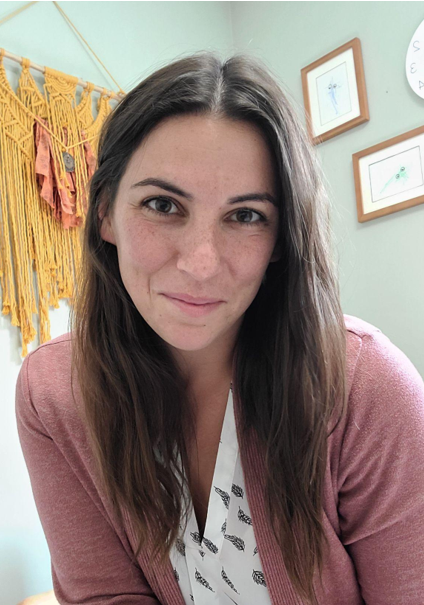
Anna Poiarkoff, LCSW
Anna Poiarkoff is a Licensed Clinical Social Worker based in Hudson, New York, with over a decade of experience in psychotherapy. Certified in Ketamine-Assisted Psychotherapy (KAP) and Psychedelic-Assisted Therapy, her work is grounded in an integrative, trauma-informed, and relational approach that honors each person's history, strengths, and way of making meaning.
Anna spent a significant part of her early career working alongside families and communities navigating complex systems in New York City. These experiences continue to shape the warmth, humility, and respect for lived experience she brings to her clinical work. In Group KAP, Anna is attentive to both the individual journey and what can emerge through shared experience—creating room for curiosity, connection, and reflection while allowing each participant to move at their own pace. She brings particular care to preparation and integration, supporting participants as they make sense of what arises and explore how it may connect with life beyond the KAP experience.

Alein Haddad-Perez, LCSW, SEP
Alein Haddad-Perez is a Licensed Clinical Social Worker in New York, New Jersey, and Colorado, an EMDRIA Certified EMDR Therapist and Approved Consultant, Somatic Experiencing Practitioner, and Colorado Natural Medicine Facilitator. She specializes in complex, attachment-based developmental trauma and dissociation, integrating relational, somatic, EMDR, and psychedelic-assisted approaches in her clinical work.
Alein brings particular attention to what can happen when deeply personal experiences unfold in the presence of others. Her background in complex trauma and dissociation informs an approach to Group KAP that is attentive to pacing, nervous-system responses, protective strategies, attachment, and the different ways people may experience connection and vulnerability. She holds this alongside an awareness of culture, identity, power, and the broader systems that shape our experiences. Within the group, she supports participants in staying connected to their own agency and inner experience while gently exploring what may become possible through relationship and shared therapeutic space.